News and Views From my kids accomplishments, to my heretical perspective of the world

July 17, 2015

Satellite Phone

Filed under: Computers, Tech & Science,Family Updates — Daryl @ 2:42 pm

We bought a satellite phone.
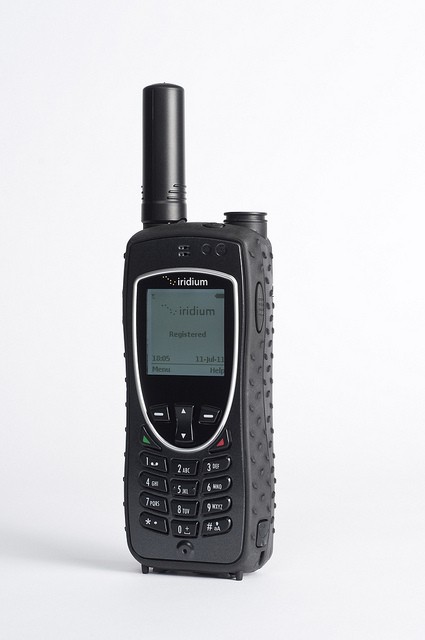
Extreme

We do a lot of world travel, and I do some hiking and 4-wheeling into areas with no phone service, so it should be useful, even just for emergencies and peace of mind. I was on a backpacking trip a couple of years ago in the Sierra when a passing hiker’s satellite phone saved one of our party from a desperate situation. I was out 4-wheeling when the car broke down and it was just by luck that another 4-wheeler came by and helped us out.

There are several satellite phone networks, some in geosynchronous orbit and some in low earth orbits. Each has advantages and disadvantages. Geosynchronous satellites are always in the same spot in the sky and if you are at a lower latitude you should always be able to connect to one (assuming you have line of sight with no trees or canyons around) Once connected the signal won’t fade or be lost. However, the distance the signal has to travel introduces lag and if you are above about 70 degrees latitude (north or south) you cannot connect.

Low earth orbit satellites consist of whole swarms of satellites, each in its own orbit circling the earth.

The low earth orbit option I chose is Iridium. Iridium’s swarm of 66 satellites 485 miles up in polar orbits has a satellite in reach of every point on the earth “almost all of the time”. Coincidentally, Iridium’s gateway is in Tempe about a mile from my house, but that doesn’t give me any advantages.

It costs a lot of money to put all those satellites in orbit (billions of dollars) and to maintain the network. Iridium went bankrupt in 1999, about a year after they went into service, part of the problem being that until all the satellites were up they couldn’t offer reliable communication. Phones were large, heavy and expensive, as were connections, and the market was not there.

They were bought out by another company a couple of years later for a fraction of the investment and have become commercially successful. According to the Wikipedia article linked to above, the US Department of Defense makes up about 1/4 of Iridium’s revenue.

There actually are a few places in the world where even an Iridium phone won’t connect, but it’s for political rather than technical reasons. A few countries don’t allow them (Cuba, North Korea…), so if you are detected to be in one of those countries the phone refuses to connect.

Satellite phones are really not much more expensive than cell phones, but the provider doesn’t subsidize the phones like ATT, Verizon and T-Mobile do. If you want a phone, you pay full price. Monthly contracts are not too expensive either compared to cell phone plans, but they generally don’t include many minutes and extra minutes are expensive. For example, my plan is $50/month and includes 10 minutes. Extra minutes are $1.29 each. That could add up pretty quickly. On the plus side, I can receive text messages (of 160 characters or less) for free, though sending one costs $.75 each.

Obviously at those prices it’s not for casual chatting or long soul-searching conversations. It’s an emergency device, and a quick update device.

I bought the smallest, lightest Iridium phone I could find: the Iridium Extreme. It is tougher than most — Mil spec ruggedized — so it should survive backpacking drops and falls, and is lighter than most at under 9 ounces, barely an ounce heavier than my cell phone. I tried it out in the back yard; it connected very quickly and surprisingly even retained the connection after coming back into my kitchen.
June 7, 2015

Thank you, El Niño (I think…)

Filed under: Computers, Tech & Science — Daryl @ 5:22 pm

This year in central Arizona we’ve experienced the wettest May on record and the first recorded rainfall in Phoenix ever on the date of June 5. This is all probably due at least in part to the El Niño effect.

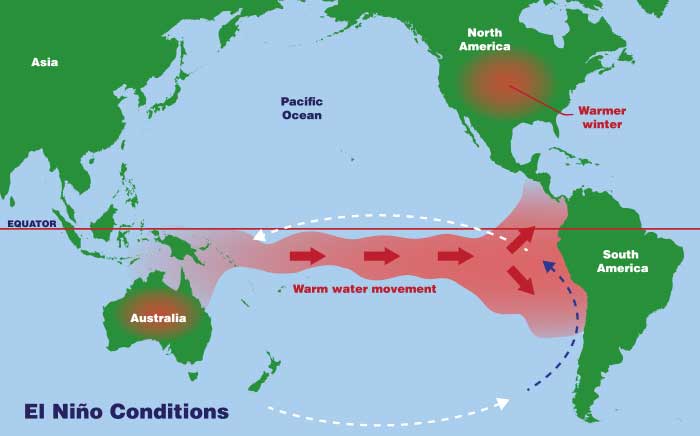
During an El Niño the surface water in the Pacific ocean off the coast of Peru and Ecuador becomes warmer than usual (currently about 4 degrees F above normal). This has effects on the weather all over the world.

The El Niño effect can be seen as an oscillation of warmth back and forth across the Pacific. Years when the water off Peru is colder than normal have been dubbed La Niña years, and the effects on weather are basically the opposite.

El Niño

The largest effect is on South America, where the warmer water evaporates more and causes a lot more rainfall, but weather over much of the world is also affected.

El Niño

Computer models predict that this year’s El Niño could be the strongest in many years, and could have a big effect on weather if it continues to build into the fall and winter as predicted. Among the predictions:
– It could take a big bite out of the drought in California and Arizona — a strong El Niño is associated with up to a 174% increase in precipitation in California;
– Fewer hurricanes in the Atlantic than usual;
– Fewer tornadoes than usual in the mid-west;
– A milder than normal winter for much of the US.
– On the flip side, they predict an “extremely active Pacific typhoon season”. There are some cool graphs and maps at the link at the top of this paragraph.

Most of this sounds good for us! The biggest worry is that the increased rainfall in California and the southwest could cause flooding damage and injuries. And then there’s this:

El Niño has an interesting effect on overall global temperatures. See the graphs below.

The top graph shows global temperatures. The bottom graph shows sea temperature deviations in the eastern Pacific; red is warmer than average and blue is cooler than average.

Climate Change and El Niño

Note how global temperatures tend to rise during an El Niño, and dip during La Niña. Note the spikes in the lower graph, particularly in 1973, 1983 and 1998. In each case the global temperatures hit a new high, and then plunged for several years afterwards. The strongest El Niño event in recent history occurred in 1998, and is associated with the highest average global temperatures ever recorded. The El Niños since then have been milder, and the La Niñas unabated, causing some observers to speculate that the rise in global temperatures has stopped. But in the long view, 1998 is clearly an outlier event caused by that year’s El Niño, with the general trend unaffected. If this year’s El Niño turns out to be as strong as predicted, we should set new records.

December 5, 2014

iDigBio

Filed under: Computers, Tech & Science,Family Updates — Daryl @ 7:32 pm

It’s pronounced “I Dig Bio”, and that’s what I’ve been working on for the past three days. I’ve been in Gainesville at the University of Florida which is sponsoring a “Hackathon” for iDigBio.

iDigBio is a collaboration (funded by the National Science Foundation) between universities and museums all over the world with a focus on digitizing natural science collections, hence the name “Integrated Digitized Biocollections”. This particular hackathon had about 25 attendees mostly from the US, but Australia and Scotland were also represented. We met to discuss and develop programs and processes to help simplify and automate the digitization process.

Filed away in basements and cabinets all over the world are hundreds of millions or billions of plant, animal, insect, mineral and other specimens collected over the past few centuries. Up to now, these specimens were only available to a few researchers and even then one had to either travel to the specimen or ship the specimen to the researcher. This current effort is to upload to the internet pictures and details about each of the specimens to make them available not only to researchers but also to the general public. It is a big effort and without some automation almost impossible. Another approach to the problem is “crowd sourcing” — using volunteer “citizen scientists” to help, and that was also a major topic of this meeting. An example of a crowd sourced project is “Notes From Nature” where volunteers have just passed one million transcriptions.

My involvement and invitation came about because of programs I developed at Arizona State University to help automate the digitization of their plant specimens. Nearly one hundred thousand records passed through my program, SALIX, and I am now working on a web version of this program that can (hopefully!) be used by institutions all over the country and world.

It’s been an interesting and fun three days working with experts in the field. I’ve learned a lot and, I hope, contributed to the effort. There’s still a lot to do!

Tomorrow Gisele and I leave Gainesville and drive to Orlando where we’ll spend a few days at Walt Disney World.

November 15, 2014

Net Neutrality

Filed under: Computers, Tech & Science,Opinion — Daryl @ 12:33 pm

There’s a lot of talk about “Net Neutrality” lately.

Basically, net neutrality means that those who provide and control the internet cannot adjust speeds or give preference based on content or other criteria. They have to remain “neutral” to the content.

Here’s a useful analogy: Compare an electricity utility and cable (or satellite) TV. For electricity you pay a monthly bill and get electricity that you can use however you want; lighting, TV, computer, air conditioning. You pay more to use more, but how you use it is entirely up to you. The power company can’t offer you more reliable power if you install a certain brand of air conditioner. With cable TV you also pay a monthly bill, but the cable company has much more control about what is available to watch. You can choose a “package” of programs and add on premium channels, but the company assembles the packages, and they often depend on financial agreements between the cable company and the networks.

Right now the internet is more like a utility company. You pay a monthly fee for service, but how you use that service is entirely up to you. Your ISP (Internet Service Providers like Cox or Comcast) can’t throttle your speeds for Amazon streaming movies but speed them up for Netflix movies, for example. This is the way the internet has functioned since the beginning with a few temporary exceptions, but things may be about to change.

In April of this year the FCC (which has jurisdiction over the internet) was reported to be considering changes to make the internet more like cable TV. One proposed change is that ISPs (Internet Service Providers like Cox or Comcast) can start charging internet companies like Netflix a surcharge to get a faster connection. Since Netflix uses about a third of all the bandwidth of the internet, it almost seems plausible that they might have to pay a little more for a reliable, fast connection. But the big concern I have is that a small start-up company providing some kind of video service might not have the budget to pay for a fast connection, and wouldn’t be able to compete on a level playing field. This would stifle competition and innovation.

And from the consumer’s perspective, I pay a premium for a faster connection already. Let me decide how to use that bandwidth.

The strongest opposition to net neutrality comes from the ISPs. Cox Cable would love to charge Netflix a fee for a fast connection. I can foresee situations like the current one between Dish Satellite and CNN: While they have been negotiating a contract for several weeks, I can’t watch CNN. If Cox and Netflix were negotiating their contract, would I be able to stream movies, or would Netflix be slowed to a crawl, or even blocked?

I can see a possibly acceptable compromise to net neutrality: Allocate bandwidth generally based on content type. For example, allow video streams (e.g. Neflix) priority over email. This sounds reasonable: I’d rather my email be delayed by a few seconds than have to wait while my movie stops and buffers. But this doesn’t help the cable companies at all; in fact it adds a layer of complexity to their systems, so I’m sure they would fight strongly against this approach.

An amusing side note to this discussion is that after Obama recently came out in favor of net neutrality, there were a few knee-jerk reactions from his usual opponents. Glen Beck mistakenly complains that the government wants to control the internet and says that with net neutrality the government will be able to “choke down his speeds”, which is exactly backwards. His guest asks why we would want the government intruding into the free internet which is working so well. Net neutrality keeps the internet free as it is now.

Ted Cruz calls net neutrality “Obamacare for the Internet“, that it would be government control of the internet. Politifact gives him a half-true, since net neutrality would allow the government control to the extent that they could prohibit favoritism and enforce neutrality rules.

Rush Limbaugh complains that net neutrality is just a liberal ruse to control the internet. He falsely states that “The FCC has just asserted its authority to regulate the Internet”, which is of course wrong; the FCC has had jurisdiction over the internet for years. But that jurisdiction has been mostly limited to ensuring that everyone plays fair and that all streams are created equal. When Limbaugh says that the internet is working fine and doesn’t need to change, he is agreeing with Obama, though he apparently doesn’t know that and would never admit it.

My conclusion to this is that net neutrality has worked well for years and is beneficial to the consumer. Any large changes to the system would only benefit ISPs and backbone providers, and would be our loss.

August 30, 2014

The Volt gives back

Filed under: Computers, Tech & Science,Family Updates — Daryl @ 9:32 pm

After more than 2 years of putting electricity into my Volt, it is finally prepared to give a little electricity back.

A company sells kits that allow you to wire into the Volt and use it to generate 120 volts. You can actually do this with any car, of course, with a simple inverter. But you are limited on how much power you can draw and for how long before the battery dies.

The Volt has a robust charging system that can handle a lot more power than most cars, and if the battery starts to get low the engine will automatically start and charge it back up.

The kit will put out pure sine wave 120V, 1500 watts sustained, and handles surges of up to 3000 watts. So if the power goes off I should have enough to run my refrigerators, perhaps only one at a time, but at least we can save our food.

Now I almost wish we would have an outage so I can try it out…

August 21, 2014

Nomorobo!

Filed under: Computers, Tech & Science — Daryl @ 5:06 pm

Nomorobo means “No more robo-calls”.

Last year the FTC issued a challenge to develop a system that would help reduce the huge amounts of telemarketing phone calls. One of the two winners of the challenge was “Nomorobo“.

I hate telemarketers! My Ooma phone system has private and community blacklists, and it helps a lot, but we still get 1-2 telemarketers getting through every day.

I just set up the free Nomorobo system, so I can’t really say yet how well it works, but reviews by other users are very positive. Unfortunately it won’t work with many of the current phone companies. It pretty much requires a VOIP (Internet) phone. So no Verizon, Century Link, AT&T. It is compatible with my Ooma VOIP phone.

Nomorobo requires that your phone system support “simultaneaous ring”, so that when you get a call it also connects to the Nomorobo office. They quickly analyze the call and if it is a telemarketer it is immediately blocked. If it is valid it rings through to my house.

I’ll see how it goes and report back here later.

Note: On my cell phone I use the Android app “Call Control” which seems to work very well. I get almost no telemarketer calls on my cell phone.

June 21, 2014

Light Bulb Update

Filed under: Computers, Tech & Science — Daryl @ 11:46 am

Eight years ago I published some data I had taken on the life of light bulbs. I recorded the lifetimes of bulbs in my kitchen ceiling. Everyone was so excited and thought it was the most interesting blog I had ever posted — NOT!

Anyway, despite the lack of enthusiasm, here’s a brief update.

Back in 2006 I had concluded that fluorescent (CFL) bulbs really did last a lot longer than incandescent bulbs. I have to now include LED bulbs in that statement too; promising, but too little data to draw any conclusions except that they are definitely better than incandescents and look better than fluorescents.

Back in the olden days, I had to replace each incandescent bulb about once a year, so with 7 bulbs there were on average 7 replacements per year. Now, it has been 2 1/2 years since I replaced any bulbs vs. an expected 17 (~2.5 x 7), so I have saved the cost of about 17 light bulbs (plus savings on the cost of electricity, of course).

In each of 2010, 2011, and 2012 I had to replace a single fluorescent bulb. I have never had to replace any LED bulbs, though I only have 3 in that ceiling.

So there you have it. Based on my data, CFLs really do last longer than incandescents, and LEDs are very promising.

Happy Solstice

Filed under: Computers, Tech & Science — Daryl @ 11:25 am

Today is the Summer Solstice, the longest day of the year, and the day when the sun reaches its apparent farthest north position (of course actually related to the tilt of the earth’s axis and its revolution around the sun).

If you were at the north pole today, you would see the sun move 360 degrees around you at an even distance from the horizon.

Interestingly, the earth’s orbit isn’t exactly a circle, but slightly elliptical. And it happens that the earth is slightly farther from the sun right around our summer solstice, and slightly closer right around our winter solstice. In the southern hemisphere, of course, the situation is reversed and the sun is slightly closer during the summer solstice and farther during the winter solstice. It is believed that this effect has a slight mellowing of the seasons in the north, and a slight enhancement in the south. Thus the Antarctic winter is a little colder than the Arctic winter. There is still some debate on the size of this effect, and other factors, such as the Arctic ocean vs. dry land in the Antarctic probably have some effect too.

And it’s true that with patience and care you can balance an egg on its end today. However, with the same patience and care you can balance an egg on its end any day of the year. There is nothing special about today in that respect.

June 13, 2014

Luck and Odds

Filed under: Computers, Tech & Science,Opinion — Daryl @ 11:48 am

This seems like an appropriate topic for today, Friday the thirteenth, with a full moon in the sky.

I was in Las Vegas a few years ago with some friends and passed a little idle time playing Keno. Keno is a game like the lottery, where you choose some numbers and hope they match the random numbers chosen by the system.

For one of my bets, I chose the numbers 1, 2, 3, 4, 5, and 6. My companions thought I was wasting my money, since you never see a sequence like that. Better to emulate the appearance of the actual results by spreading the numbers out in a random-like manner.

But my point then and now is that this set of numbers is exactly as likely as any other set of 6 numbers. It’s true you never see a straight sequence like this, but you could choose any set of 6 numbers and say the same thing. Random is random, no numbers are preferred over any others.

To me it helps emphasize how unlikely it is to win at a game like this. If my set of sequential numbers ever came up, people would be astonished, or suspicious, and ask, “What are the odds?” The answer is that the odds are exactly the same as any other set of 6 numbers. If you’re playing a lottery with 49 balls, the odds of selecting any specific set of 6 balls is about 1 in 14 million.

March 23, 2014

SSD

Filed under: Computers, Tech & Science — Daryl @ 12:11 am

I was working at Intel back in the early 80s when Intel invented the flash drive (back then it was an EEPROM; almost the same). Of course then it was small capacity, slow and expensive, but the potential seemed huge. I remember remarking to a fellow engineer that we should shortly be able to replace our hard drives with flash memory. Current capacities weren’t large enough and it was much too expensive in those days, but I didn’t think it would be long before hard drives were obsolete.

Fast forward 30 years. During this time flash memory has continued to get faster and cheaper, but hard drives have also kept moving ahead getting larger and cheaper, and a little faster.

Hard drives are still cheaper than “Solid State Drives” (or SSD, as flash-based hard drives are called), but we seem to have reached a tipping point where it might be worth the extra cost for the gain in performance. So today I replaced the hard drive in my main desktop computer with an SSD.

I am amazed at the improvement in performance. It is greater than any other upgrade I have ever done, including upgrading the CPU or adding RAM. Windows 7 used to take over 2 minutes to cold boot, with icons trickling in for a minute or two after that, but it now is totally up and ready in about 20 seconds. Programs launch almost immediately. Even web browsing is much, much faster; apparently I haven’t been limited by my internet connection but rather by hard drive speed. When I compile programs, the hard drive used to thrash around loading libraries and modules for up to a minute; now it is not quite instantaneous, but very, very fast. Programs close much faster (as they write their configuration files to disk) and system shut down is much faster. I will no longer dread doing a Windows Update with the required reboot, since I can be back up and running in less than a minute.

If you are thinking of replacing your computer because it is too slow, you might consider just replacing the hard drive with an SSD for less than the cost of a new computer. It might give you more benefit for your money.

I got one from the Samsung 840 EVO series. They seem to have the best price and competitive performance.

Older Posts »

Powered by WordPress